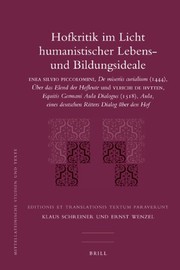
Hofkritik im Licht humanistischer Lebens- und Bildungsideale
Pius II Pope · 2011
Where to buy
Amazon’s price changes daily, so the most accurate place to see it is there, at the moment you buy.
View on AmazonAbout the book
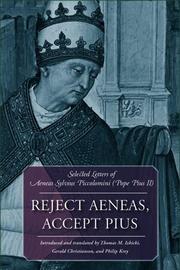
"Royal and princely courts in the late Middle Ages and Early Modern period did not only fill the roles of centers of government. The striving for a synthesis between power and the mind made courts into sites of art and literature, of instruction and education. Sons of nobles learned at court not only the use of weapons, but also reading, writing and arithmetic. Jousting gave young knights the opportunity to test their weapons skills and horsemanship. Moreover festivities were a part of court life, and feasts were celebrated extravagantly. Those nobles who lived as knights as well as the academically educated bourgeois used royal and princely courts as opportunities for assuring their professional careers and for social advancement. The reality of the social and ruling fabric of the court included in the late Middle Ages and Early Modern period some rough criticism from those eloquent contemporaries who branded the court as a morally corrupt place of vices. Church reformers brought the courtly lifestyle and the Christian ethic into irreconcilable contrast. How Enea Silvio Piccolimini, the humanist occupying the seat of St. Peter in Rome, and Ulrich von Hutten, the knightly poet, perceived, criticized and justified courtly life, is the subject of this book."--Publisher's website.
Book details
- Year
- 2011
- Language
- German
- Series
- Mittellateinische Studien und Texte -- v. 44
- Publisher
- Brill
- Editions
- 1
- Pages
- 288
- ISBN
- 9789004210318
Data source: Wikidata
More by Pius II Pope