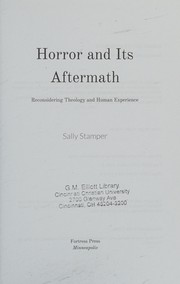
Horror and Its Aftermath
Stamper · 2016
Where to buy
Amazon’s price changes daily, so the most accurate place to see it is there, at the moment you buy.
View on AmazonThis is an affiliate link: if you buy through it, the site earns a small commission at no extra cost to you, which helps us bring quality content and maintain the site. As an Amazon Associate we earn from qualifying purchases.
About the book
Theological anthropology often brings psychology to bear on the contingent nature of human existence in relationship to God. In this volume, Sally Stamper articulates one modern trajectory of theological recourse to psychology (comprising Schleiermacher, Nietzsche, and Tillich) as the ground on which she brings clinical psychoanalytic theory and early childhood studies into conversation with fundamental questions about the relationship of God to human suffering and its remediation. She develops her argument from the assertions that human experience evolves within an awareness of human vulnerability to profound suffering and that insight into consequent human anxiety is a powerful resource for soteriology, eschatology, and theological anthropology. Stamper narrates this "normative anxiety" by integrating object relations theories of early childhood development and critical readings of literary texts for young children. She gestures toward a new eschatological vision that poses the radical otherness of a transcendent God as key to divine remediation of human suffering, in the process building on Marilyn McCord Adams's soteriological response to human horror-participation and on Jonathan Lear's assertion of radical hope in response to catastrophic collapse of cultural resources for making meaning.
Book details
- Year
- 2016
- Language
- English
- Publisher
- 1517 Media
- Editions
- 1
- Pages
- 236
- ISBN
- 9781451492682
Data source: Wikidata