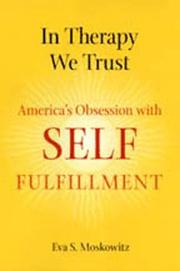
In therapy we trust
Eva S. Moskowitz · 2008
Where to buy
Amazon’s price changes daily, so the most accurate place to see it is there, at the moment you buy.
View on AmazonThis is an affiliate link: if you buy through it, the site earns a small commission at no extra cost to you, which helps us bring quality content and maintain the site. As an Amazon Associate we earn from qualifying purchases.
About the book
"Beginning with the example of a "Mind Cure" developed by mid-nineteenth-century clockmaker Phineas P. Quimby, Moskowitz explains how Americans' growing fascination with therapy led them to adopt new kinds of reform - including, at the turn of the twentieth century, provisions for psychological services in prisons, courts, hospitals, and schools. Depression-era divorce rates prompted colleges and high schools to offer courses on marital happiness and produced a new marriage-counseling industry. During World War II, Moskowitz shows, the army devoted unprecedented energy to a soldier's "psychological readiness for combat." Moskowitz also explores more recent developments, including Cold War-era psychological assumptions of magazine campaigns that targeted unhappy housewives. She confronts the social protest movements in the 60s and the explosion of 70s self-help fads that continue to the present.". "In a study that encompasses all aspects of American society - from television talk shows to the criminal justice system, from office politics to world politics - Moskowitz identifies a debilitating "sense of self" that is intimately bound up with the major developments of the twentieth century."--BOOK JACKET.
Book details
- Year
- 2008
- Language
- English
- Publisher
- Johns Hopkins University Press
- Editions
- 1
- Pages
- 362
- ISBN
- 9780801889745
Data source: Wikidata