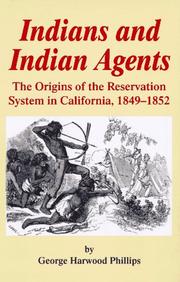
Indians and Indian agents
George Harwood Phillips · 1997
Where to buy
Amazon’s price changes daily, so the most accurate place to see it is there, at the moment you buy.
View on AmazonAbout the book
The Gold Rush of 1849 drastically changed the lives of the Indians of the interior of California as white gold-seekers poured into the region. Some Indians fought the intruders, and when conflicts escalated, the federal government sent three agents to California to settle disputes. The agents negotiated with the Indians a series of treaties that set aside large portions of the interior as reservations. Considering these activities a usurpation of states' rights, the government of California vehemently opposed the ratification of the treaties. Subsequently, in mid-1852, the U.S. Senate rejected the treaties, and the first superintendent of California Indian affairs was dispatched to the state. . In this book, George Harwood Phillips challenges the conventional interpretation of this period, which holds that the Indians offered weak and fragmented resistance to the miners, that they meekly submitted to the dictates of the Indian agents, that the reservations established by the agents never functioned, and that the superintendent himself singlehandedly invented the reservation system. Phillips argues that Indian resistance was stiff and concerted, that the Indians doggedly negotiated with the agents, that some of the reservations established by the agents functioned for more than two years, and that the superintendent merely expanded upon the agents' accomplishments.
Book details
- Year
- 1997
- Language
- English
- Publisher
- University of Oklahoma Press
- Editions
- 1
- ISBN
- 9780585154312
Data source: Wikidata
More by George Harwood Phillips