Introducing the planets and their moons
Peter John Cattermole · 2014
Where to buy
Amazon’s price changes daily, so the most accurate place to see it is there, at the moment you buy.
View on AmazonThis is an affiliate link: if you buy through it, the site earns a small commission at no extra cost to you, which helps us bring quality content and maintain the site. As an Amazon Associate we earn from qualifying purchases.
About the book
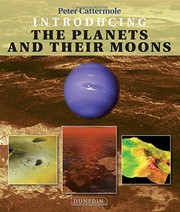
The solar system, of which Earth is but a small part, is an amazing collection of bodies, ranging in size from the Sun, through the giant planet Jupiter, to specks of dust left over from the primordial nebula from which the solar system emerged. Excluding the Sun, the eight major planets, together with several dwarf planets and at least 160 orbiting natural satellites, form the main mass of the system. These are made from an amalgam of silicate, metal, ice, and gas. Introducing the Planets and Their Moons describes the characteristics and geological development of the eight large planetary bodies and their more substantial moons. This includes discussion of their orbital properties, magnetic fields, atmospheres, and mutual interactions. Rather than deal with the system planet by planet, the book's approach is comparative. Thus, one chapter deals with planetary orbits, another with planetary differentiation, and a third with volcanism. This enables the reader to perceive immediately how their position and size led these bodies along different evolutionary paths. Introducing the Planets and Their Moons is illustrated with some of the finest images available and includes a useful glossary for reference.
Book details
- Year
- 2014
- Language
- English
- Publisher
- Dunedin Academic Press Ltd.
- Editions
- 1
- Pages
- 142
- ISBN
- 9781780460291
Data source: Wikidata