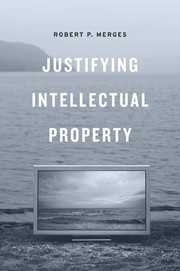
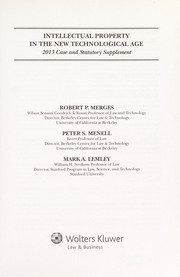
Justifying intellectual property
Robert P. Merges · 2011
Where to buy
Amazon’s price changes daily, so the most accurate place to see it is there, at the moment you buy.
View on AmazonThis is an affiliate link: if you buy through it, the site earns a small commission at no extra cost to you, which helps us bring quality content and maintain the site. As an Amazon Associate we earn from qualifying purchases.
About the book
Why should a property interest exist in an intangible item? In recent years, arguments over intellectual property have often divided proponents - who emphasize the importance of providing incentives for producers of creative works - from skeptics who emphasize the need for free and open access to knowledge. In a wide-ranging and ambitious analysis, Robert P. Merges establishes a sophisticated rationale for the most vital form of modern property: IP rights. His insightful new book answers the many critics who contend that these rights are inefficient, unfair, and theoretically incoherent. But Merges' vigorous defense of IP is also a call for appropriate legal constraints and boundaries: IP rights are real, but they come with real limits. Drawing on Kant, Locke, and Rawls as well as contemporary scholars, Merges crafts an original theory to explain why IP rights make sense as a reward for effort and as a way to encourage individuals to strive. He also provides a novel explanation of why awarding IP rights to creative people is fair for everyone else in society, by contributing to a just distribution of resources. Merges argues convincingly that IP rights are based on a solid ethical foundation, and - when subject to fair limits - these rights are an indispensable part of a well-functioning society.
Book details
- Year
- 2011
- Language
- English
- Publisher
- Harvard University Press
- Editions
- 2
- Pages
- 405
- ISBN
- 9780674049482
Data source: Wikidata
More by Robert P. Merges