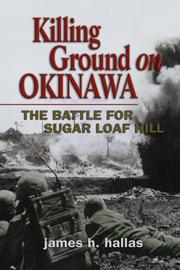
Killing ground on Okinawa
James H. Hallas · 1996
Where to buy
Amazon’s price changes daily, so the most accurate place to see it is there, at the moment you buy.
View on AmazonAbout the book
On May 12, 1945, the 6th Marine Division was nearing Naha, capital of Okinawa. To the division's front lay a low, loaf-shaped hill. It looked no different from other hills seized with relative ease over the past few days. But this hill, soon to be dubbed "Sugar Loaf," was very different indeed. Part of a complex of three hills, Sugar Loaf formed the western anchor of General Mitsuru Ushijima's Shuri Line, which stretched from coast to coast across the island. Sugar Loaf was critical to the defense of that line, preventing U.S. forces from turning the Japanese flank. Over the next week, the Marines made repeated attacks on the hill losing thousands of men to death, wounds, and combat fatigue. Not until May 18 was Sugar Loaf finally seized. Two days later, the Japanese mounted a battalion-sized counterattack in an effort to regain their lost position, but the Marines held. . Ironically, these losses may not have been necessary. General Lemuel Shepherd, Jr., had argued for an amphibious assault to the rear of the Japanese defense line, but his proposal was rejected by U.S. Tenth Army Commander General Simon Bolivar Buckner. That refusal led to a controversy that has continued to this day.
First sentence: The grimy brown army truck wheezed along the narrow Okinawan road.
Book details
- Year
- 1996
- Language
- English
- Publisher
- Naval Institute Press
- Editions
- 2
- Pages
- 272
- ISBN
- 9781591143567
Data source: Wikidata
More by James H. Hallas