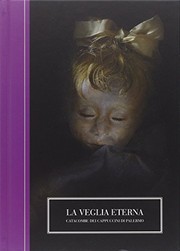
La veglia eterna
Carlo Vannini, Ivan Cenzi · 2014
Where to buy
Amazon’s price changes daily, so the most accurate place to see it is there, at the moment you buy.
View on AmazonAbout the book
The reader is guided to descend the stairway that leads to the catacombs and, beyond the iron gate, here come the mummies. They are standing upright in white niches, wearing their withered clothes. They resemble a macabre version of the earliest black and white photos, where men with huge moustaches and women with bulky underskirts stand in stiff poses looking like stuffed dummies. The most beautiful one is little Rosalia, snug in her tiny coffin: her expression is serene, her skin smooth and soft, and her long blond locks are gathered by a yellow bow and endow her with an extraordinary feeling of liveliness. Whereas Rosalia Lombardo was embalmed, as were various other bodies present in the Catacombs, most of the corpses underwent a process of natural mummification – which does not involve the elimination of entrails and brain or the injection of special preserving liquids. An extremely ancient tradition across Europe, mummification was especially popular in Sicily, and the Palermo Catacombs still remain the most extraordinary expression of this tradition, on account of the sheer number of corpses preserved there (1,252 bodies and 60 wooden coffins, some of them empty, according to the 2011 census). Page after page, the book is an historical and artistic guide to the largest collection of spontaneous and artificial mummies in the world. The Capuchin friars were first established in Palermo in 1534, based in the pre-existing church Santa Maria della Pace. Initially, they were the only ones to be buried there even if, this so-called ‘burial’ consisted of them being simply wrapped in a sheet and lowered down into a kind of large cistern under the altar of Sant’Anna which became a mass grave or charnel house. The Capuchin community in Palermo was growing, therefore a larger burial place was needed, both for reasons of health and space. For this reason, some years before 1599, excavations were begun to create an underground cemetery, and on completion it was decided to transfer the remains from the overflowing charnel house to the new space. But the opening of the stone which sealed the common grave brought with it a surprise: forty-five corpses which had been laid there – without coffins and piled on top of each other – were discovered to be practically intact. There was clearly something miraculous about this, it was felt, and so it was decided to display forty of these corpses in the new space, setting them all around its walls and placing an effigy of the V
Book details
- Year
- 2014
- Language
- Italian
- Series
- Bizzarro bazar
- Publisher
- Logos
- Editions
- 1
- Pages
- 142
- ISBN
- 9788857607351
Data source: Wikidata