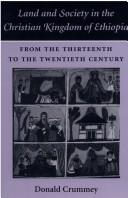
Land and society in the Christian kingdom of Ethiopia
Donald Crummey · 2000
Where to buy
Amazon’s price changes daily, so the most accurate place to see it is there, at the moment you buy.
View on AmazonAbout the book
"Donald Crummey's work is the first extended history of Ethiopia to focus on the system of taxation and tribute, called gult, that underpinned the region's social and political structure for some seven centuries." "Land and Society in the Christian Kingdom of Ethiopia offers an original perspective on how the rulers of Ethiopia - one of the great subcenters of agricultural innovation and development - used land to support their dominion. Crummey draws on all the surviving documents pertaining to the holding and granting of agricultural land in the Ethiopian highlands from the thirteenth to the twentieth century. By examining how social relations affected the conditions for economic production and how people of power drew on the wealth created by society's basic producers, he provides new insight into how ordinary farming and herding folk were incorporated into and affected by the institutions that ruled them." "Presenting new evidence to suggest that the nature of landed property and social class in Ethiopia was considerably more sophisticated than hitherto recognized, Land and Society in the Christian Kingdom of Ethiopia constitutes a major challenge to previous assumptions and understandings about land and social relations in this highly structured society."--Jacket.
First sentence: From the late thirteenth to the late twentieth century, the Solomonids, a dynasty of kings claiming descent from the biblical king Solomon and queen of Sheba, played a leading role in the political history of Ethiopia.
Book details
- Year
- 2000
- Language
- English
- Publisher
- University of Illinois Press
- Editions
- 1
- Pages
- 400
- ISBN
- 9780252024825
Data source: Wikidata
More by Donald Crummey