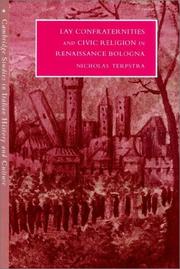
Lay confraternities and civic religion in Renaissance Bologna
Nicholas Terpstra · 1995
Where to buy
Amazon’s price changes daily, so the most accurate place to see it is there, at the moment you buy.
View on AmazonAbout the book
This book analyzes the social, political, and religious roles of confraternities - the lay groups through which the Italians of the Renaissance expressed their individual and collective religious beliefs - in Bologna in the fifteenth and sixteenth centuries. Confraternities shaped the civic religious cult through charitable activities, public shrines, and processions. This civic religious role expanded as they became politicized: patricians used the confraternities increasingly in order to control the civic religious cult, civic charity, and the city itself. The book examines in detail how confraternities initially provided laypeople of the artisanal and merchant classes with a means of expressing a religious life separate from, but not in opposition to, the local parish or mendicant house. By the mid-sixteenth century, patricians dominated the traditional lay confraternities while artisans and merchants had few options beyond parochial confraternities which were controlled by parish priests.
Book details
- Year
- 1995
- Language
- English
- Publisher
- Cambridge University Press
- Editions
- 2
- ISBN
- 9780511887376
Data source: Wikidata
More by Nicholas Terpstra