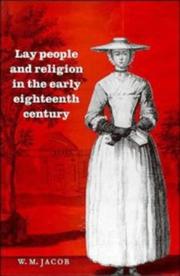
Lay People and Religion in the Early Eighteenth Century
W. M. Jacob · 1996
Where to buy
Amazon’s price changes daily, so the most accurate place to see it is there, at the moment you buy.
View on AmazonAbout the book
This book investigates the part that Anglicanism played in the lives of lay people in England and Wales between c. 1689 and 1750. It is concerned with what they did rather than what they believed, and explores their attitudes to clergy, religious activities, personal morality and charitable giving, especially in relation to education and health care, and church building and improvement. Using evidence from diaries, letters, account books, newspapers and popular publications and parish and diocesan records, Dr Jacob demonstrates that Anglicanism held the allegiance of a significant proportion of all people. Lay people took the lead in managing the affairs of the parishes, which were the major focus of communal and social life, and supported the spiritual and moral discipline of the Church courts. The author shows that early-eighteenth-century England and Wales remained a largely traditional society and that Methodism emerged from a strong Church. Contrary to conventional views of the period, the Anglican Church was central to the lives of most people in England and Wales.
First sentence: The aim of this book is to explore the place of Christianity in the lives of lay adherents of the Church of England during the period between the Revolution Settlement of 1688/9 and the middle of the eighteenth century, when the Evangelical and Methodist revivals began to offer new challenges to the established Church.
Book details
- Year
- 1996
- Language
- English
- Publisher
- Cambridge University Press
- Editions
- 4
- Pages
- 270
- ISBN
- 9780521892957
Data source: Wikidata