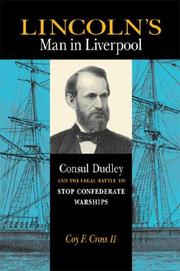
Lincoln's Man in Liverpool
Coy F. Cross · 2007
Where to buy
Amazon’s price changes daily, so the most accurate place to see it is there, at the moment you buy.
View on AmazonAbout the book
"Refusing to side with either the Union or the Confederacy, Great Britain officially declared neutrality in the U.S. Civil War, thereby putting into effect the Foreign Enlistment Act, which forbade all belligerents to arm ships in her ports. Unofficially, many British citizens sympathized with the Confederacy because the Union's naval blockade stopped the flow of cotton from Southern fields to English textile mills. For this reason, the Confederate representative James Bulloch found British shipbuilders willing to fill his orders for battle-ready vessels without inquiring too closely into his intentions." "The U.S. Consul in Liverpool, Thomas Haines Dudley, suspected Bulloch was commissioning warships for an assault on Union naval or commerce ships. Despite his lack of diplomatic experience - President Lincoln had appointed Dudley as a political favor - the consul committed himself to preventing vessels destined for the Confederacy from leaving the shipyards. Dudley hired private detectives, bribed workers, bought sworn affidavits, and provided room and board for turn-coat Confederate sailors willing to furnish evidence that could be used in court." "Confronting innumerable political obstacles and even threats to his life, Dudley served his country faithfully and courageously. He achieved his greatest success years after the war's conclusion when in 1872 an international tribunal awarded the United States $15 million in reparations for the British government's failure to enforce its own neutrality laws. This true account of Dudley's years of service shed new light on a crucial diplomatic front of the American Civil War."--BOOK JACKET.
Book details
- Year
- 2007
- Language
- English
- Publisher
- Northern Illinois University Press
- Editions
- 3
- Pages
- 190
- ISBN
- 9780875803739
Data source: Wikidata