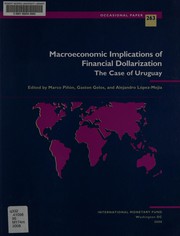
Macroeconomic implications of financial dollarization
Gaston Gelos · 2008
Where to buy
Amazon’s price changes daily, so the most accurate place to see it is there, at the moment you buy.
View on AmazonAbout the book
Uruguay has experienced a remarkable recovery since the 2002 crisis, supported by sound policies and favorable external conditions. With the framework put in place in 2002, Uruguay abandoned an exchange rate peg in favor of a free float, adopted a monetary regime initially based on money targets, improved financial prudential norms and supervision, and accumulated significant central bank reserves. Against this background, Uruguay now faces issues beyond those addressed to stabilize the economy . As the country pursues key post-crisis monetary and financial reforms, the analysis provided in this paper comments on the ongoing efforts to move toward a fully fledged inflation-targeting regime and develop interest rates as monetary instruments, as well as on the preparedness of the financial system to deal with shocks, and the adequacy of current central bank reserves.--Publisher's description.
Book details
- Year
- 2008
- Language
- English
- Series
- Occasional paper -- 263
- Publisher
- International Monetary Fund
- Editions
- 4
- Pages
- 71
- ISBN
- 9781589067271
Data source: Wikidata
More by Gaston Gelos