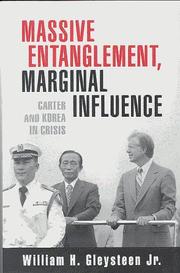
Massive entanglement, marginal influence
William H. Gleysteen · 2012
Where to buy
Amazon’s price changes daily, so the most accurate place to see it is there, at the moment you buy.
View on AmazonAbout the book
"In 1979-80, Korean president Park Chung Hee was assassinated, a new strongman seized power, student protests were crushed, and military brutality in Kwangju City provoked a massive civil uprising. Throughout the turmoil the United States sought to uphold constitutional rule and pressed for democratic progress. Despite a powerful military and economic presence, however, the United States was constrained from using major sanctions to enforce this effort for fear of endangering South Korea's security.". "William H. Gleysteen Jr., who served as U.S. Ambassador to Korea during that period, examines how President Jimmy Carter's troop withdrawal and human rights policies - conceived in abstraction from East Asian realities - contributed to Park's demise. Using extensive documentation, including his own correspondence with the State Department, Gleysteen reviews U.S. behavior in the subsequent crisis, discussing such problems as inadequate intelligence, the dilemma of military and economic leverage too powerful to use, the constraints of constitutional authority, and the danger of dealing with leaders who monopolize local communications and shamelessly distort the truth."--BOOK JACKET.
Book details
- Year
- 2012
- Language
- English
- Publisher
- Brookings Institution Press
- Editions
- 1
- ISBN
- 9780815791096
Data source: Wikidata