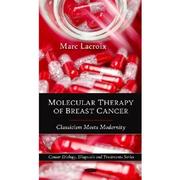
Molecular therapy of breast cancer
Marc Lacroix · 2009
Where to buy
Amazon’s price changes daily, so the most accurate place to see it is there, at the moment you buy.
View on AmazonAbout the book
Breast cancer is the most frequently diagnosed type of cancer and a second leading cause of cancer death in women after lung cancer. Despite their proven efficacy, classical therapies are, however, unable to cure metastatic breast cancer and are often associated with significant toxicity and side-effects, due to a wide spectrum of action. During the last years, our increasing knowledge of the molecular pathways underlying cancer development has led to the introduction of new drugs, of which most are directed towards very specific targets. Rather than to be used as single agents, these “modern” compounds could ultimately be combined with classical molecules. Here are described nearly 150 drugs that are currently used in routine therapy or are in clinical trials in breast cancer patients. From the classical tamoxifen, fluorouracil, cyclophosphamide, doxorubicin, epirubin, docetaxel, paclitaxel…, to the more recently introduced ixabepilone, lapatinib, vorinostat, everolimus, bevacizumab…, they also include capecitabine, gemcitabine, trastuzumab, bevacizumab, fulvestrant, aromatase inhibitors, cancer vaccines, inhibitors of tumor-induced osteolysis, insulin-like growth factor-I receptor inhibitors, poly(ADP-ribose) polymerase (PARP)-1 inhibitors, and many others. This book offers an insight into current developments of breast cancer therapy, when classicism meets modernity.
Book details
- Year
- 2009
- Language
- English
- Publisher
- Nova Publishers
- Editions
- 1
- Pages
- 291
- ISBN
- 9781607415930
Data source: Wikidata
More by Marc Lacroix