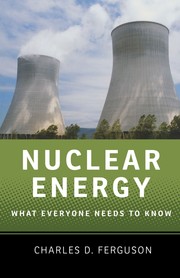
Nuclear energy
Ferguson, Charles D. · 2011
Where to buy
Check today’s price on Amazon. We do not show prices because they change daily.
View on AmazonAffiliate link. As an Amazon Associate we earn from qualifying purchases.
About the book
Originally perceived as a cheap and plentiful source of power, the commercial use of nuclear energy has been controversial for decades. Worries about the dangers that nuclear plants and their radioactive waste posed to nearby communities grew over time, and plant construction in the United States virtually died after the early 1980s. The 1986 disaster at Chernobyl only reinforced nuclear power's negative image. Yet in the decade prior to the Japanese nuclear crisis of 2011, sentiment about nuclear power underwent a marked change. The alarming acceleration of global warming due to the burning of fossil fuels and concern about dependence on foreign fuel has led policymakers, climate scientists, and energy experts to look once again at nuclear power as a source of energy. In this accessible overview, Charles D. Ferguson provides an authoritative account of the key facts about nuclear energy. What is the origin of nuclear energy? What countries use commercial nuclear power, and how much electricity do they obtain from it? How can future nuclear power plants be made safer? What can countries do to protect their nuclear facilities from military attacks? How hazardous is radioactive waste? Is nuclear energy a renewable energy source? Featuring a discussion of the recent nuclear crisis in Japan and its ramifications, Ferguson addresses these questions and more in a book that is essential for anyone looking to learn more about this important issue. - Back cover.
Book details
- Year
- 2011
- Language
- English
- Publisher
- Oxford University Press
- Editions
- 3
- Pages
- 240
- ISBN
- 9780199759460
Data source: Wikidata