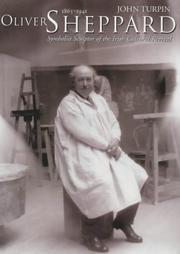
Oliver Sheppard (1865-1941
John Turpin · 2001
Where to buy
Amazon’s price changes daily, so the most accurate place to see it is there, at the moment you buy.
View on AmazonAbout the book
"The period from the 1890s to the 1930s was one of important cultural and political change in Ireland. The sculpture of Oliver Sheppard represented this - from the Celtic Revival to the Irish Free State. He was born into an artisan sculptor's family and grew up in Dublin's northside. He began his studies at the Dublin Metropolitan School of Art and continued in London (under Edouard Lanteri) and in Paris. In 1902 he returned to work in Dublin where he was the leading teacher of sculpture until his retirement in 1937. Sheppard's sensitive clay modelling was in the Romantic-Realist style of French and British sculpture of the late 19th century and he excelled in the subtle modelling of the body and in describing character. His early Irish mythological subjects reflect the influence of W. B. Yeats and are part of the poetic imagery of the search for national identity. He made his name in the early 20th century with his celebrated public sculptures of James Clarence Mangan (St. Stephen's Green), The Pikeman (Wexford) and The Death of Cuchulainn - the national memorial to the 1916 Rising (General Post Office, Dublin). He made many portrait busts and reliefs of patriots, artists and professional people - notably of medical men - and his work also included medals for Trinity College Dublin. An active figure in the Irish art world, he was a member and Professor of Sculpture of the Royal Hibernian Academy. This is the first full-scale treatment of his work, based on the sculptor's own archives."--BOOK JACKET.
Book details
- Year
- 2001
- Language
- English
- Publisher
- Four Courts Press
- Editions
- 1
- Pages
- 256
- ISBN
- 9781851825738
Data source: Wikidata