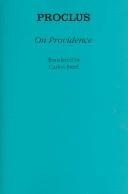
On providence
Proclus Diadochus · 2007
Where to buy
Check today’s price on Amazon. We do not show prices because they change daily.
View on AmazonAffiliate link. As an Amazon Associate we earn from qualifying purchases.
About the book
"'The universe is, as it were, one machine, wherein the celestial spheres are analogous to the interlocking wheels and the particular beings are like the things moved by the wheels' and all events are determined by an inescapable necessity. To speak of free choice or self determination is only an illusion we human beings cherish. Thus writes Theodore the engineer to his old friend Proclus. Proclus' reply is one of the most remarkable discussions on fate, providence and free choice in Late Antiquity. It continues a long debate that had started with the first polemics of the Platonists against the Stoic doctrine of determinism. How can there be place for free choice and moral responsibility in a world governed by an unalterable fate? Not with standing its great interest, Proclus' treatise has not received the attention it deserves, probably because its text is not very accessible to the modern reader. It has survived only in a Latin medieval translation. This first English translation will bring the arguments he formulates again to the fore."--Bloomsbury Publishing The universe is, as it were, one machine, wherein the celestial spheres are analogous to the interlocking wheels and the particular beings are like the things moved by the wheels' and all events are determined by an inescapable necessity. To speak of free choice or self determination is only an illusion we human beings cherish. Thus writes Theodore the engineer to his old friend Proclus. Proclus' reply is one of the most remarkable discussions on fate, providence and free choice in Late Antiquity. It continues a long debate that had started with the first polemics of the Platonists against the Stoic doctrine of determinism. How can there be place for free choice and moral responsibility in a world governed by an unalterable fate? Notwithstanding its great interest, Proclus' treatise has not received the attention it deserves, probably because the text survived only in a Latin medieval translation and, in its original language, is not very accessible to the modern reader. This volume, the first English translation of the work, redresses this problem and once again brings the arguments he formulates to the fore.
Book details
- Year
- 2007
- Language
- English
- Series
- Ancient commentators on Aristotle
- Publisher
- Duckworth
- Editions
- 1
- Pages
- 126
- ISBN
- 9780715635766
Data source: Wikidata
More by Proclus Diadochus