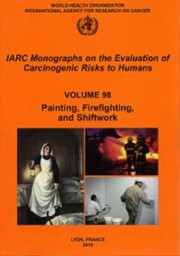
Painting, firefighting, and shiftwork
IARC Working Group on the Evaluation of Carcinogenic Risks to Humans · 2010
Where to buy
Check today’s price on Amazon. We do not show prices because they change daily.
View on AmazonAffiliate link. As an Amazon Associate we earn from qualifying purchases.
About the book
"This volume of the IARC Monographs provides evaluations of the carcinogenicity of shiftwork, painting and firefighting. Shiftwork is estimated to involve about 15-20% of the total working population. It is most prevalent among workers in the health care, transportation, communication, leisure and hospitality sectors. Shiftwork involving work at night is the most disruptive for the circadian clock. Painters are potentially exposed to the chemicals found in paint products during their application and removal, and may also be exposed to other workplace hazards, such as asbestos or crystalline silica dust. Firefighters may be exposed at different intensity levels depending on crew assignment, tasks, and/or the time spent at fires. All fires generate a very large number of toxic combustion products, including known, probable or possible carcinogens. An IARC Monographs Working Group reviewed epidemiological evidence, animal bioassays where appropriate, and mechanistic and other relevant data to reach conclusions as to the carcinogenic hazard of these three exposure circumstances to humans."--books.google.
Book details
- Year
- 2010
- Language
- English
- Series
- IARC monographs on the evaluation of carcinogenic risks to humans -- v. 98
- Publisher
- International Agency for Research on Cancer
- Editions
- 1
- Pages
- 804
- ISBN
- 9789283212980
Data source: Wikidata
More by IARC Working Group on the Evaluation of Carcinogenic Risks to Humans