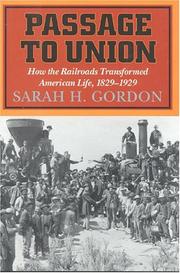
Passage to Union
Sarah H. Gordon · 1997
Where to buy
Amazon’s price changes daily, so the most accurate place to see it is there, at the moment you buy.
View on AmazonThis is an affiliate link: if you buy through it, the site earns a small commission at no extra cost to you, which helps us bring quality content and maintain the site. As an Amazon Associate we earn from qualifying purchases.
About the book
In Passage to Union, Sarah Gordon has written a richly informed narrative history of the growth of the railroads, an American icon. But her conclusions are surprising. Where the railroads and their entrepreneurs are ordinarily celebrated for their accomplishments, Ms. Gordon finds that the cost of their achievements was high. Conflicts of interest - at local, state, and regional levels - characterized railroad growth at every stage. Despite the stated aims of government and the railroad corporations to promote settlement and commerce, Ms. Gordon shows that the states lost control of these enterprises and lost the economic benefits of their traffic. Smaller towns withered as people and money flowed to larger cities. By 1900 the union that had emerged reflected the worst fears of railroad critics. The South and West had been settled, but wealth had flowed so heavily to the cities that rural life had lost its attraction. Passage to Union is compelling reading because Ms. Gordon has drawn from diaries, memoirs, literature, advertisements, newspapers and magazines, public records, and railroad history to construct her narrative. The impact of the railroads on people and their communities is powerfully illustrated in this absorbing story of apparent triumph and real loss.
Book details
- Year
- 1997
- Language
- English
- Publisher
- Ivan R. Dee, Publisher
- Editions
- 2
- Pages
- 415
- ISBN
- 9781566631389
Data source: Wikidata