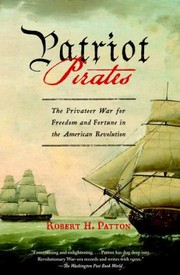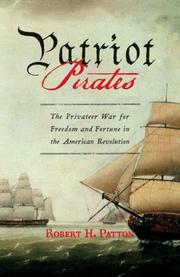
Patriot pirates
Robert H. Patton · 2008
Where to buy
Amazon’s price changes daily, so the most accurate place to see it is there, at the moment you buy.
View on AmazonAbout the book
They were legalized pirates empowered by the Continental Congress to raid and plunder, at their own considerable risk, as much enemy trade as they could successfully haul back to America's shores; they played a central role in American's struggle for independence and later turned their seafaring talents to the slave trade; embodying the conflict between enterprise and morality central to the American psyche. In Patriot Pirates, Robert H. Patton, grandson of the battlefield genius of World War II, writes that during America's Revolutionary War, what began in 1775 as a New England fad--converting civilian vessels to fast-sailing warships, and defying the Royal Navy's overwhelming firepower to snatch its merchant shipping--became a massive seaborne insurgency that ravaged the British economy and helped to win America's independence. More than two thousand privately owned warships were commissioned by Congress to prey on enemy transports, seize them by force, and sell the cargoes for prize money to be divided among the privateer's officers, crewmen, and owners.Patton writes how privateering engaged all levels of Revolutionary life, from the dockyards to the assembly halls; how it gave rise to an often cutthroat network of agents who sold captured goods and sparked wild speculation in purchased shares in privateer ventures, enabling sailors to make more money in a month than they might otherwise earn in a year. As one naval historian has observed, "The great battles of the American Revolution were fought on land, but independence was won at sea."Benjamin Franklin, then serving at his diplomatic post in Paris, secretly encouraged the sale of captured goods in France, a calculated violation of neutrality agreements between France and Britain, in the hopes that the two countries would come to blows and help take the pressure off American fighters.Patton writes about those whose aggressive speculation in privateering promoted the war effort: Robert Morris--a financier of the Revolution, signer of the Declaration of Independence, member of the Continental Congress who helped to fund George Washington's army, later tried (and acquitted) for corruption when his deals with foreign merchants and privateers came to light, and emerged from the war as one of America's wealthiest men . . . William Bingham... John R. Livingston--scion of a well-connected New York family who made no apologies for exploiting the war for profit, calling it "a means of making my fortune." He wor
Book details
- Year
- 2008
- Language
- English
- Publisher
- Pantheon
- Editions
- 3
- Pages
- 320
- ISBN
- 9780375422843
Data source: Wikidata