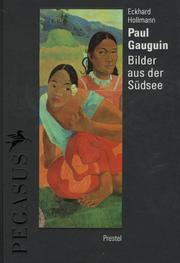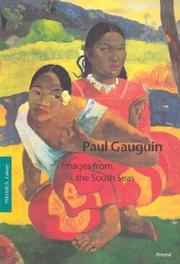
Paul Gauguin
Eckhard Hollmann, Simon Haviland · 1996
Where to buy
Amazon’s price changes daily, so the most accurate place to see it is there, at the moment you buy.
View on AmazonThis is an affiliate link: if you buy through it, the site earns a small commission at no extra cost to you, which helps us bring quality content and maintain the site. As an Amazon Associate we earn from qualifying purchases.
About the book
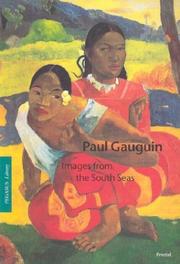
"In the spring of 1891, Paul Gauguin left France on his first journey to Tahiti. During his stay there, he achieved an unprecedented intensification of color and formal simplicity in his painting. In the more than 200 works he produced in the South Pacific, Gauguin was primarily concerned with expressing his own condition and his ideas about the world, including his hopes for a reconciliation between civilization and nature, culture and primitivism. This is particularly clear in his book Noa Noa, which he wrote and illustrated to provide his audience in far-off Paris with an introduction to his paintings." "Eckhard Hollmann presents an exciting view of Paul Gauguin as a rebel and outsider in art, not forgetting the French painter's impressive self-dramatizations, the sole purpose of which was to establish a socially respected position for the artist. An analysis of Gauguin's paintings, his living conditions, and his writings casts fresh light on his significance as the "prophet of a new form of art" and pioneer of modernism."--Jacket.
Book details
- Year
- 1996
- Language
- English
- Publisher
- Prestel
- Editions
- 3
- Pages
- 116
- ISBN
- 9783791316734
Data source: Wikidata
More by Eckhard Hollmann