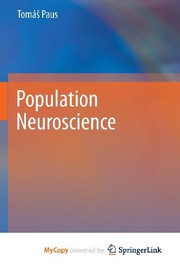
Population Neuroscience
Tomas Paus · 2013
Where to buy
Amazon’s price changes daily, so the most accurate place to see it is there, at the moment you buy.
View on AmazonThis is an affiliate link: if you buy through it, the site earns a small commission at no extra cost to you, which helps us bring quality content and maintain the site. As an Amazon Associate we earn from qualifying purchases.
About the book
Is Newton’s brain different from Rembrandt’s? Does a mother’s diet during pregnancy impact brain growth? Do adolescent peers leave a signature in the social brain? Does the way we live in our middle years affect how our brains age? To answer these and many other questions, we can now turn to population neuroscience. Population neuroscience endeavors to identify environmental and genetic factors that shape the function and structure of the human brain; it uses the tools and knowledge of genetics (and the “omics” sciences), epidemiology and neuroscience. This text attempts to provide a bridge spanning these three disciplines so that their practitioners can communicate easily with each other when working together on large-scale imaging studies of the developing, mature and aging brain. By understanding the processes driving variations in brain function and structure across individuals, we will also be able to predict an individual’s risk of (or resilience against) developing a brain disorder. In the long term, the hope is that population neuroscience will lay the foundation for personalized preventive medicine and, in turn, reduce the burden associated with complex, chronic disorders of brain and body.
Book details
- Year
- 2013
- Language
- English
- Publisher
- Springer London, Limited
- Editions
- 4
- ISBN
- 9783642364501
Data source: Wikidata