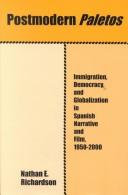
Postmodern Paletos
Nathan E. Richardson · 2001
Where to buy
Check today’s price on Amazon. We do not show prices because they change daily.
View on AmazonAffiliate link. As an Amazon Associate we earn from qualifying purchases.
About the book
"When Spanish dictator Francisco Franco legalized internal immigration in 1947 he unwittingly inaugurated the greatest period of urban expansion and rural de-population that Spain had known. During the next two decades, nearly four million citizens would move from Spain's traditional pueblos perdidos to overburdened urban metropolises. Along with wooden trunks and baskets of chickens, the immigrants (or paletos, as they were often called) bore on their journey the weight of centuries of ideological meaning tied to the geographic regions they were traversing. To abandon rural Spain had come to signify a rejection of manhood, wealth, Christian values, and even Spanishness itself. Paletos, however innocent they may have appeared, were not ideologically neutral. In the coming decades the weight and complexity of the meanings behind immigration, the country, and the city would only grow as Spain advanced from economic under development, social ignorance, and political reaction to full-fledged participation in global economics and politics, activities that would reshape what it meant to be an immigrant and paleto both within and across the geographic border that had traditionally defined the Spanish nation."--BOOK JACKET.
Book details
- Year
- 2001
- Language
- English
- Publisher
- Bucknell University Press
- Editions
- 3
- Pages
- 260
- ISBN
- 9780838754986
Data source: Wikidata