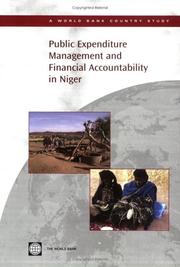
Public expenditure management and financial accountability in Niger
World Bank · 2005
Where to buy
Amazon’s price changes daily, so the most accurate place to see it is there, at the moment you buy.
View on AmazonAbout the book
This study shows how difficult it is for Niger to significantly change its expenditure composition in a short time span. A narrow and volatile domestic resource base, heavy dependence on aid, and a large share of pre-determined expenditures such as external debt payments are important factors behind this lack of flexibility. There are ways, though, to create space in the budget for increasing public spending on priority sectors. The study identifies a number of measures in this regard, such as increasing domestic revenues, more realistic and conservative budgeting, strengthening cash management, controlling the wage bill, prudent borrowing and attracting higher external financing for recurrent costs in priority sectors. The study also shows that enhancing the efficiency and transparency of public spending is as important as increasing spending for PRS priority sectors. It thoroughly assesses public management systems in Niger and presents an action plan, jointly elaborated by the Government and its main external partners, to address the main challenges in this area. This action plan contains a priority set of measures to improve budget preparation, execution as well as internal and external oversight.
Book details
- Year
- 2005
- Language
- English
- Series
- A World Bank country study
- Publisher
- World Bank
- Editions
- 1
- Pages
- 119
- ISBN
- 9780821363669
Data source: Wikidata
More by World Bank