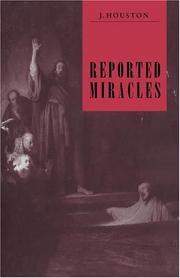
Reported miracles
J. Houston · 2009
Where to buy
Check today’s price on Amazon. We do not show prices because they change daily.
View on AmazonAffiliate link. As an Amazon Associate we earn from qualifying purchases.
About the book
Suppose that one is presented with a report of a miracle as an exception to nature's usual course. Should one believe the report and so come to favour the idea that a god has acted miraculously? David Hume argued that no reasonable person should do anything of the kind. Many religiously skeptical philosophers agree with him, and have both developed and defended his reasoning, while some theologians concur or offer other reasons why those who are believers in God should also refuse to accept accounts of miracles as accurate reportage. This book argues to the contrary. Miracle stories can and may have apologetic value, may contribute towards the reasonableness of belief in God, while appropriately attested miracles may be accepted by believers in God. 'But', it may be insisted, 'scientists and historians, and all of us who want to believe rightly, judiciously, and justifiably, must assume that natural laws always hold, or else epistemic anarchy looms'. Epistemological responses to these worries are forthcoming in this study, and the variously inadequate attitudes of leading twentieth century theologians are repaired where repair is possible. The discussion yields reasons for a fuller integration of theology with the other sciences than is common. These issues have a long history. So the book begins with a careful exposition in their own terms of the views of principal relevant thinkers; this contributes to the history of ideas, as well as presenting essential resources for the argumentative and evaluative study which follows.
Book details
- Year
- 2009
- Language
- English
- Publisher
- Cambridge University Press
- Editions
- 4
- Pages
- 276
- ISBN
- 9780521043977
Data source: Wikidata