Rising tide
John M. Barry · 1997
Where to buy
Check today’s price on Amazon. We do not show prices because they change daily.
View on AmazonAffiliate link. As an Amazon Associate we earn from qualifying purchases.
About the book
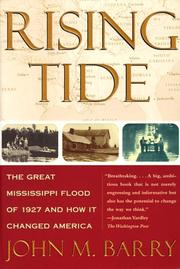
In 1927, the Mississippi River swept across an area roughly equal in size to Massachusetts, Connecticut, New Hampshire, and Vermont combined, leaving water as deep as thirty feet on the land stretching from Illinois and Missouri south to the Gulf of Mexico. Close to a million people - in a nation of 120 million - were forced out of their homes. Some estimates place the death toll in the thousands. The Red Cross fed nearly 700,000 refugees for months. Rising Tide is the story of this forgotten event, the greatest natural disaster this country has ever known. But it is not simply a tale of disaster. The flood transformed part of the nation and had a major cultural and political impact on the rest. Rising Tide is an American epic about science, race, honor, politics, and society. Rising Tide begins in the nineteenth century, when the first serious attempts to control the river began. The story focuses on engineers James Eads and Andrew Humphreys, who hated each other. Out of the collision of their personalities and their theories came a compromise river policy that would lead to the disaster of the 1927 flood yet would also allow the cultivation of the Yazoo-Mississippi Delta and create wealth and aristocracy, as well as a whole culture. In the end, the flood had indeed changed the face of America, leading to the most comprehensive legislation the government had ever enacted, touching the entire Mississippi valley from Pennsylvania to Montana. In its aftermath was laid the foundation for the New Deal of Franklin D. Roosevelt.
Book details
- Year
- 1997
- Language
- English
- Publisher
- Simon & Schuster
- Editions
- 7
- Pages
- 528
- ISBN
- 9780684840024
Data source: Wikidata