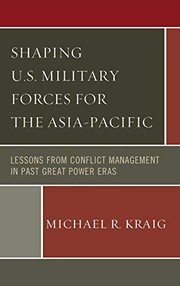
Shaping U.S. Military Forces for the Asia-Pacific
Michael R. Kraig · 2014
Where to buy
Amazon’s price changes daily, so the most accurate place to see it is there, at the moment you buy.
View on AmazonAbout the book
The first twenty years of post-Cold War US defense and diplomatic policies toward Asia have looked a good deal like the previous 50, namely: continued deterrence based upon overwhelming, offensive military predominance. In East Asia, all powers harbor common and divergent interests based on fragmented nationalist identities and complex economic interdependence. In this multipolar Asian system, new Chinese military capabilities could support both the wish to secure its own interests as well as a more expansive vision for regional leadership, which might harbor a destabilizing geopolitical agenda. How the United States addresses this reality via military procurements and employment concepts for the Asian theater could either detract from or enhance crisis stability. The US defense establishment must reorient its force posture to save money, manage conflicts of interest, and prevent future interstate crises. This analysis provides a framework for how the United States should ideally structure and use military power so as to best support the diplomatic resolution of conflicting interests without resorting to full-scale warfare. It also critiques the usual Western military focus on offensive strategic predominance in force postures, itself often fuelled by the unrealistic pursuit of the opponent's complete submission via victory in decisive battles.
Book details
- Year
- 2014
- Language
- English
- Publisher
- Rowman & Littlefield Publishers
- Editions
- 1
- Pages
- 348
- ISBN
- 9781442226142
Data source: Wikidata