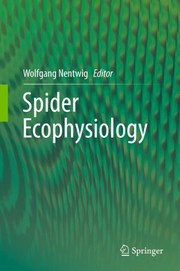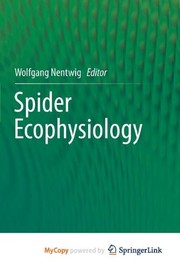
Spider Ecophysiology
Wolfgang Nentwig · 2013
Where to buy
Check today’s price on Amazon. We do not show prices because they change daily.
View on AmazonAffiliate link. As an Amazon Associate we earn from qualifying purchases.
About the book
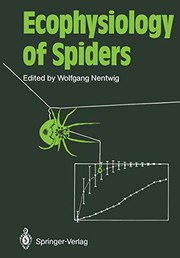
With over 43,000 species, spiders are the largest predacious arthropod group. They have developed key characteristics such as multi-purpose silk types, venoms consisting of hundreds of components, locomotion driven by muscles and hydraulic pressure, a highly evolved key-lock mechanism between the complex genital structures, and many more unique features. After 300 million years of evolutionary refinement, spiders are present in all land habitats and represent one of the most successful groups of terrestrial organisms. Ecophysiology combines functional and evolutionary aspects of morphology, physiology, biochemistry and molecular biology with ecology. Cutting-edge science in spiders focuses on the circulatory and respiratory system, locomotion and dispersal abilities, the immune system, endosymbionts and pathogens, chemical communication, gland secretions, venom components, silk structure, structure and perception of colours as well as nutritional requirements. Spiders are valuable indicator species in agroecosystems and for conservation biology. Modern transfer and application technologies research spiders and their products with respect to their value for biomimetics, material sciences, and the agrochemical and pharmaceutical industries.
Book details
- Year
- 2013
- Language
- English
- Publisher
- Springer
- Editions
- 3
- Pages
- 539
- ISBN
- 9783642339882
Data source: Wikidata
More by Wolfgang Nentwig