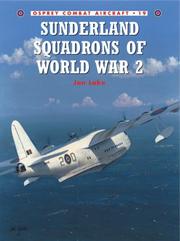
Sunderland Squadrons of World War 2
Jon Lake · 2000
Where to buy
Amazon’s price changes daily, so the most accurate place to see it is there, at the moment you buy.
View on AmazonAbout the book
Derived from the C-Class 'Empire' flying boats of the mid-1930s, the Sunderland was RAF Coastal Command's staple maritime patrol aircraft throughout World War 2. A crucial 'player' in the Battle of the Atlantic, it was instrumental in defeating the U-Boat menace which threatened to starve the UK into submission in 1941-42. Heavily armed (it was nicknamed the 'Flying Porcupine' due to its 14 machine guns), the Mk 1 entered service in June 1938, and proved to be an immediate success. Later versions boasted more powerful engines, turret guns, radar and additional fuel capacity. Aside from its global use by the RAF, it also saw employment with the RAAF, RNZAF, RCAF and Free French air force. Some 749 were eventually built, and by 1945 no fewer than 28 squadrons were flying them. This book details the Sunderland's service in all theatres of World War 2, as well as outlining its postwar service.
First sentence: Between the wars, the RAF relied on a succession of ungainly looking biplane flying boats for maritime patrol duties, though their role tended to be as much about colonial policing, 'showing the flag' and anti-piracy patrols, as it was about Fleet co-operation and anti-submarine warfare.
Book details
- Year
- 2000
- Language
- English
- Series
- Osprey Combat Aircraft 19
- Publisher
- Osprey Publishing
- Editions
- 1
- Pages
- 96
- ISBN
- 9781841760247
Data source: Wikidata
More by Jon Lake