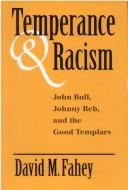
Temperance and racism
David M. Fahey · 1996
Where to buy
Amazon’s price changes daily, so the most accurate place to see it is there, at the moment you buy.
View on AmazonAbout the book
Temperance and Racism restores the Templars, now an almost forgotten footnote in American and British social history, to a position of prominence within the temperance movement. Lodge rituals, sociable evenings, and denunciations of drink attracted a largely youthful membership in North America and Britain. The group's ideology of universal membership made it unique among fraternal organizations in the late nineteenth century and led to pioneering efforts on behalf of equal rights for women. The Templars' policy toward blacks, however, was more ambiguous. Millions of women and men joined the order after the American Civil War, yet mounting tensions arose over membership for recently freed slaves. The organization split apart in 1876 when Templars in the American South, who wanted to exclude blacks together, and those in Great Britain, where racial exclusion offended many members, could not reach a compromise on the issue. Spurred by a desire to remain a truly international organization, the two sides eventually reconciled in 1887 after southern whites lost their once impressive membership numbers and, consequently, their clout within the order and after British Templars recognized they could not force racial inclusiveness in the American South. Their decision to reject racism in principle while supporting segregation in practice contradicted the Templars' ideal of universal brotherhood. Combined with the years of schism, this spelled the end of international leadership for the order, and their numbers gradually dwindled.
Book details
- Year
- 1996
- Language
- English
- Publisher
- University Press of Kentucky
- Editions
- 4
- Pages
- 224
- ISBN
- 9780813161518
Data source: Wikidata
More by David M. Fahey