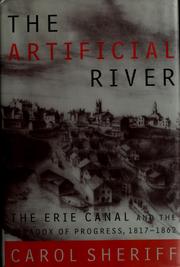
The artificial river
Carol Sheriff · 1996
Where to buy
Check today’s price on Amazon. We do not show prices because they change daily.
View on AmazonAffiliate link. As an Amazon Associate we earn from qualifying purchases.
About the book
The story of the Erie Canal - the 363-mile "artificial river" built to connect the Atlantic seaboard to the Great Lakes - offers a rich perspective on the tumultuous era between the War of 1812 and the Civil War. Completed in 1825 as part of the nation's larger transportation revolution, the Canal opened the Midwest to commerce and settlement, helped make New York City the nation's greatest port, and accelerated the pace of American industrial and economic change. The history of the Canal's impact on the nation's economy has been told skillfully by other historians, and Carol Sheriff considers instead the human dimension of the revolutionary changes that the Canal helped set off: widespread geographic mobility; rapid environmental change; government intervention in economic development; market expansion; the reorganization of work; and moral reform. Among the middle classes, these changes would be grouped together as signs of progress or improvement. With innovative archival research, Sheriff documents the social and cultural responses of men, women, and children - farmers, businessmen, government officials, tourists, workers - to the Erie Canal and the progress it represented. For them, progress meant taking an active role in realizing a divinely sanctioned movement toward the perfectability of the natural and human worlds. This conception of progress would play a central role in defining Northern sectional identity in the decades leading to the Civil War.
Book details
- Year
- 1996
- Language
- English
- Publisher
- Hill and Wang
- Editions
- 2
- Pages
- 251
- ISBN
- 9780809027538
Data source: Wikidata
More by Carol Sheriff