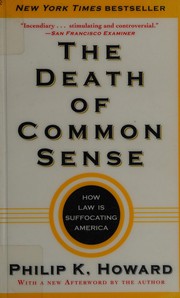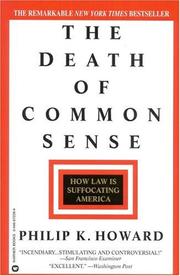
The death of common sense
Philip K. Howard · 1994
Where to buy
Amazon’s price changes daily, so the most accurate place to see it is there, at the moment you buy.
View on AmazonAbout the book
Americans are bursting with frustration at government. Thick rule books dictate results that almost never make sense. Government can barely fix potholes or fire an employee who doesn't show up for work, much less accomplish important goals. With the best of intentions, government hands out new legal rights like land grants, usually to victims of history or circumstance, but fails to notice that it then loses its ability to balance everyone's welfare. The land of freedom has become a legal maze of obligation, ritual, and obeisance. With dozens of vivid stories - some humorous, some tragic - Philip Howard peels away the basic assumptions of a system that is driving Americans crazy. Law began infiltrating the nooks and crannies of our lives in the 1960s, crowding out our common sense. Rules replaced thinking. Process replaced responsibility. One false idea lay at the bottom of these developments: that human judgment should he banned from anything to do with law. We fell for the idea that all could be laid out in a tidy legal system where decisions were predetermined, social choices premade. The Death of Common Sense grinds up sacred legal cows, one after another. Again and again, it shows how they lead to the bureaucracy and laws that frustrate and humiliate every citizen. Then, Howard turns his scrutiny to the fears that have kept us obedient and powerless in our daily decisions, and sets us on a course to take back control of our lives.
First sentence: IN THE WINTER OF 1988, NUNS OF THE MISSIONARIES OF CHARity were walking through the snow in the South Bronx in their saris and sandals to look for an abandoned building that they might convert into a homeless shelter.
Book details
- Year
- 1994
- Language
- English
- Publisher
- Random House Publishing Group
- Editions
- 5
- Pages
- 256
- ISBN
- 9780679644101
Data source: Wikidata
More by Philip K. Howard