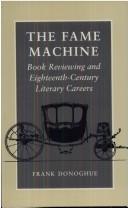
The fame machine
Frank Donoghue · 1996
Where to buy
Amazon’s price changes daily, so the most accurate place to see it is there, at the moment you buy.
View on AmazonThis is an affiliate link: if you buy through it, the site earns a small commission at no extra cost to you, which helps us bring quality content and maintain the site. As an Amazon Associate we earn from qualifying purchases.
About the book
The Fame Machine explores how the concept of the literary career was reshaped by the commodification of writing in the eighteenth century, a period between an age of substantial sponsorship by the nobility and the fully developed literary market of the nineteenth century. It argues that, as the conditions of literary production shifted from a patronage system to an open market, the traditional means by which authors measured their success and acquired their credentials changed as well. The book shows that in the open market critical periodicals stepped in and assumed the role of official arbiters of literary merit, to the extent that Byron would call the reviewers of his day the "monarch-makers in poetry and prose." In tracing this process, the author focuses on two successful mid-century journals, the Monthly Review (founded in 1749) and the Critical Review (founded in 1756), which dedicated themselves exclusively to reviewing new publications. Examining the professional lives of Laurence Sterne, Oliver Goldsmith, Tobias Smollett, and several women authors, the book makes the case that the Reviews in effect constructed the narratives that we would now call literary careers.
Book details
- Year
- 1996
- Language
- English
- Publisher
- Stanford University Press
- Editions
- 1
- Pages
- 226
- ISBN
- 9780804725637
Data source: Wikidata