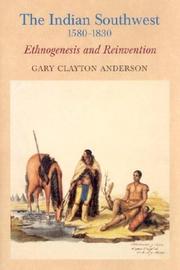
The Indian Southwest, 1580-1830
Gary Clayton Anderson · 1999
Where to buy
Amazon’s price changes daily, so the most accurate place to see it is there, at the moment you buy.
View on AmazonAbout the book
In The Indian Southwest, 1580-1830, Gary Clayton Anderson argues that, in the face of European conquest and severe droughts that reduced their food sources, Indians in the Southwest proved remarkably adaptable and dynamic, remaining independent actors, some even prospering. Groups such as the Jumanos and Coahuiltecans, decimated by warfare, Spanish slave-raiding, and disease, either temporarily joined Spanish missions or assimilated into other tribes. Others, including the Caddos and Wichitas, survived the Spanish onslaught by remaining on its fringe, migrating in order to survive and expanding their involvement with other tribes. Yet others, such as the Comanches and Apaches, incorporated remnant bands and individuals, experienced population increases, and developed stronger economic systems. By 1780, when Spanish settlements on the southern plains faced economic stagnation, Indian tribes who had forged new alliances and trade networks enjoyed a thriving exchange-based political economy. These native power structures remained in the Southwest long after the Americans arrived. In fact, the vibrancy of Indian societies in the Southwest today is explained in part by the success of their ancestors almost three centuries ago.
Book details
- Year
- 1999
- Language
- English
- Publisher
- University of Oklahoma Press
- Editions
- 2
- ISBN
- 9780585118024
Data source: Wikidata
More by Gary Clayton Anderson