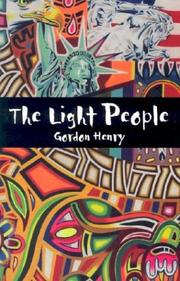
The light people
Gordon Henry · 1995
Where to buy
Amazon’s price changes daily, so the most accurate place to see it is there, at the moment you buy.
View on AmazonThis is an affiliate link: if you buy through it, the site earns a small commission at no extra cost to you, which helps us bring quality content and maintain the site. As an Amazon Associate we earn from qualifying purchases.
About the book
Taking inspiration from traditional Anishinabe stories and drawing from his own family's storytelling tradition, Gordon Henry, Jr., has woven a tapestry of interlocking narratives in The Light People, a novel of surpassing emotional strength. His characters tell of their experiences, dreams, and visions in a multitude of literary styles and genres. Poetry, drama, legal testimony, letters, and essays combine with more conventional narrative techniques to create a multifaceted, deeply rooted, and vibrant portrait of the author's own tribal culture. Keenly aware of Eurocentric views of that culture, Henry offers a "corrective history" whose humor and wisdom transcend the merely political. . In the contemporary Minnesota village of Four Bears, on the mythical Fineday Reservation, a young Chippewa boy named Oskinaway is trying to learn the whereabouts of his parents. His grandparents turn for help to a tribal elder, one of the light people, Jake Seed. Seed's assistant, a magician who performs at children's birthday parties, tells Oskinaway's family his story, which gives way to the stories of those he encounters. Narratives unfold into earlier narratives, spinning back in time and encompassing the intertwined lives of the Fineday Chippewas, eventually revealing the place of Oskinaway and his parents in a complex web of human relationships. Along the way we hear the story of Oshawanung, who fails to bury the amputated leg of Moses Four Bears. Years later, when his nephew sees the preserved leg on display in a museum, a legal battle over custody of the leg raises issues of cultural identity and the ownership and reburial of anthropological specimens. Issues of American Indian identity also inform the story of Elijah Cold Crow, who loses his voice after being punished at a boarding school where he is forbidden to speak his Native language, and the essays of Bombarto Rose, a mixed-blood whose attempts to understand his place between two cultures by means of coldly analytical European-style logic periodically erupt into traditional Ojibway poetic imagery. The blending of genres is a tradition of Native American literature; here Gordon Henry extends the technique into a virtuoso tour de force, mixing history with myth, essay with poetry, social science with fiction. His voice is original and engaging, and his stories are wise and moving parabIes.
Book details
- Year
- 1995
- Language
- English
- Publisher
- University of Oklahoma Press
- Editions
- 3
- Pages
- 226
- ISBN
- 9780806127354
Data source: Wikidata
More by Gordon Henry