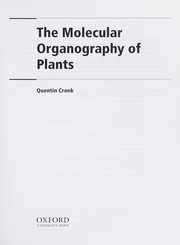
The molecular organography of plants
Quentin C. B. Cronk · 2009
Where to buy
Amazon’s price changes daily, so the most accurate place to see it is there, at the moment you buy.
View on AmazonAbout the book
"From the cells of aquatic algae to the majestic redwoods towering 100 metres above the California coast, the history of plant evolution has been one of increasing complexity. The underlying rationale for this book is to answer the question: How, when land plant embryos at a few-celled stage are essentially comparable, do plants achieve such radically different adult phenotypes, from mosses to tree-ferns, and grasses to oak trees?" "The Molecular Organography of Plants chronicles the origin, and importance, of the complex plant organs that have allowed plants to shape the earth's biosphere, and seeks to explain why and how the genetic mechanisms governing these developmental trajectories have diverged so much. It provides a detailed account of the organs produced by land plants (stems, roots, leaves, seeds, flowers) into which is incorporated what is rapidly becoming known of the molecular mechanisms responsible. Plant organs are therefore discussed in the context of the evolution of development ("evo-devo"), and their basis in molecular developmental genetics is described. The result is a novel synthesis of classical morphology and molecular developmental biology that takes a broad look at the evolution of plant form."--Jacket.
Book details
- Year
- 2009
- Language
- English
- Series
- Oxford biology
- Publisher
- Oxford University Press
- Editions
- 3
- Pages
- 259
- ISBN
- 9780199550364
Data source: Wikidata
More by Quentin C. B. Cronk