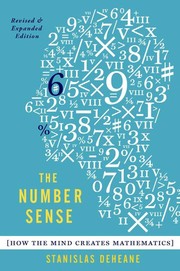
The Number Sense
Stanislas Dehaene · 1997
Where to buy
Amazon’s price changes daily, so the most accurate place to see it is there, at the moment you buy.
View on AmazonThis is an affiliate link: if you buy through it, the site earns a small commission at no extra cost to you, which helps us bring quality content and maintain the site. As an Amazon Associate we earn from qualifying purchases.
About the book
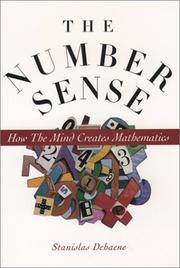
Dehaene, a mathematician turned cognitive neuropsychologist, begins with the eye-opening discovery that animals, including rats, pigeons, raccoons, and chimpanzees, can perform simple mathematical calculations. He goes on to describe ingenious experiments that show that human infants also have a rudimentary number sense. Dehaene shows that the animal and infant abilities for dealing with small numbers and with approximate calculations persist in human adults and have a strong influence on the way we represent numbers and perform more complex calculations later in life. According to Dehaene, it was the invention of symbolic systems for writing and talking about numerals that started us on the climb to higher mathematics. He traces the cultural history of numbers and shows how this cultural evolution reflects the constraints that our brain architecture places on learning and memory. Dehaene also explores the unique abilities of idiot savants and mathematical geniuses, asking whether simple cognitive explanations can be found for their exceptional talents. In a final section, the cerebral substrates of arithmetic are described. We meet people whose brain lesions made them lose highly specific aspects of their numerical abilities - one man, in fact, who thinks that two and two is three! Such lesion data converge nicely with the results of modern imaging techniques (PET scans, MRI, and EEG) to help pinpoint the brain circuits that encode numbers. From sex differences in arithmetic to the pros and cons of electronic calculators, the adequacy of the brain-computer metaphor, or the interactions between our representations of space and of number, Dehaene reaches many provocative conclusions that will intrigue anyone interested in mathematics or the mind.
First sentence: Books on natural history have recounted the following anecdote since the eighteenth century: A nobleman wanted to shoot down a crow that had built its nest atop a tower on his domain.
Book details
- Year
- 1997
- Language
- English
- Publisher
- Oxford University Press, USA
- Editions
- 2
- Pages
- 288
- ISBN
- 9780195132403
Data source: Wikidata
More by Stanislas Dehaene