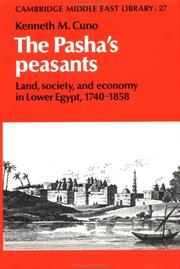
The Pasha's peasants
Kenneth M. Cuno · 1993
Where to buy
Amazon’s price changes daily, so the most accurate place to see it is there, at the moment you buy.
View on AmazonAbout the book
This is a revisionist study of the eighteenth- and nineteenth-century rural origins of modern Egypt, dealing with the first phase of the rise of the modern state and the country's incorporation into the world economy. Professor Cuno uses previously underexploited sources - court records, fatwas, and land-tax registers - to shed new light on changes in the system of peasant land tenure, urban-rural commerce, the rural social structure, and the interplay of formal law with peasant customs and attitudes. The author challenges traditional interpretations of Egypt's past which draw too sharp a distinction between the 'Ottoman' and 'modern' periods, a distinction closely related to the notion that contact with Europe brought on the 'awakening' of the modern nation. Cuno offers a new perspective on changes introduced in the agrarian regime by Muhammad Ali Pasha (1805-48) by comparing them with the policies of earlier rulers. He also refutes the view that cash-crop agriculture, the commoditization of land, and a stratified rural society were nineteenth-century developments, showing instead that they were centuries-old features of the Egyptian countryside. The Pasha's peasants will be of interest not only to students of Egyptian and Middle East history but also to those with a general interest in issues of law and society, peasants, and the making of the modern non-Western world.
Book details
- Year
- 1993
- Language
- English
- Publisher
- Cambridge University Press
- Editions
- 1
- Pages
- 295
- ISBN
- 9780521404785
Data source: Wikidata