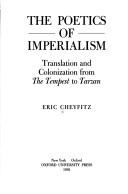
The poetics of imperialism
Eric Cheyfitz · 1990
Where to buy
Amazon’s price changes daily, so the most accurate place to see it is there, at the moment you buy.
View on AmazonAbout the book
From Columbus onward, the discourse of European-American expansion has been characterized by a poetics of imperialism, Eric Cheyfitz contends, a poetics that has set the conventions for translating the languages of the inhabitants of the New World into the language of empire, a discourse that has conquered by translating the inhabitants themselves into "natives, "savages," "cannibals," or "Indians.". Cheyfitz charts the course of American imperialism from the arrival of Renaissance Europeans in a New World open for material and rhetorical cultivation to the violent foreign ventures of twentieth-century America in a Third World judged equally in need of cultural translation. Passionately and provocatively, he reads James Fenimore Cooper and Leslie Marmon Silko, Frederick Douglass and Edgar Rice Burroughs within and against the imperial framework. At the center of the book is Shakespeare's Tempest, at once transfiguring the first permanent English settlement at Jamestown and figuring much of American literature. In a final chapter completely new to this edition, Cheyfitz extends the argument of The Poetics of Imperialism by reaching back to the visual and verbal representations of Native Americans produced by the English of the Roanoke Voyages, two decades before the establishment of the Jamestown colony.
First sentence: WE COULD UNDERSTAND these words, which I have taken out of context for the moment, from Edgar Rice Burroughs's exceptionally popular 1912 romance Tarzan of the Apes, as articulating the deepest desires of U.S. foreign policy toward the Third World in the twentieth century (243).
Book details
- Year
- 1990
- Language
- English
- Publisher
- Oxford University Press, USA
- Editions
- 1
- Pages
- 224
- ISBN
- 9780195050950
Data source: Wikidata
More by Eric Cheyfitz