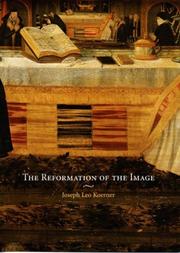
The reformation of the image
Joseph Leo Koerner · 2007
Where to buy
Amazon’s price changes daily, so the most accurate place to see it is there, at the moment you buy.
View on AmazonAbout the book
With his 95 Theses, Martin Luther advanced the radical notion that all Christians could enjoy a direct, personal relationship with God, shattering years of Catholic tradition. The text of the Bible, the Word of God itself, Luther argued, revealed the only true path to salvation. But if words, not iconic images, showed the way to salvation, why didn't religious imagery during the Reformation disappear along with indulgences? The answer, according to Joseph Leo Koerner, lies in the paradoxical nature of Protestant religious imagery itself, which is at once both iconic and iconoclastic. Koerner masterfully demonstrates this point not only with a multitude of Lutheran images, many never before published, but also with a close reading of a single pivotal work, Lucas Cranach the Elder's altarpiece for the City Church in Wittenberg (Luther's parish). As Koerner shows, Cranach, breaking all the conventions of traditional Catholic iconography, created an entirely new aesthetic for the new Protestant ethos. In the Crucifixion scene of the altarpiece, for instance, Christ is alone and stripped of all his usual attendants, with nothing separating him from Luther (preaching the Word) and his parishioners. And while the Holy Spirit is nowhere to be seen, it is nonetheless dramatically present as the force animating Christ's drapery. According to Koerner, it is this "iconoclash" that animates the best Reformation art.
Book details
- Year
- 2007
- Language
- English
- Publisher
- University Of Chicago Press
- Editions
- 3
- Pages
- 494
- ISBN
- 9780226448374
Data source: Wikidata
More by Joseph Leo Koerner