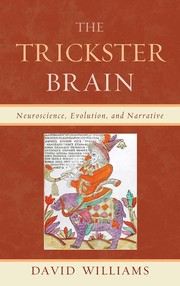
The trickster brain
David Williams · 2012
Where to buy
Amazon’s price changes daily, so the most accurate place to see it is there, at the moment you buy.
View on AmazonThis is an affiliate link: if you buy through it, the site earns a small commission at no extra cost to you, which helps us bring quality content and maintain the site. As an Amazon Associate we earn from qualifying purchases.
About the book
Until recently, scientific and literary cultures have existed side-by-side but most often in parallel universes, without connection. This book addresses the premise that humans are a biological species stemming from the long process of evolution, and that we do exhibit a universal human nature, given to us through our genes. From this perspective, literature is shown to be a product of our biological selves. By exploring central ideas in neuroscience, evolutionary biology, linguistics, music, philosophy, ethics, religion, and history, the author shows that it is the circuitry of the brain's hard-wired dispositions that continually create similar tales around the world: "archetypal" stories reflecting ancient tensions that arose from our evolutionary past and the very construction of our brains. The book asserts that to truly understand literature, one must look at the biological creature creating it. By using the lens of science to examine literature, we can see how stories reveal universal aspects of the biological mind. The Trickster character is particularly instructive as an archetypal character who embodies a raft of human traits and concerns, for Trickster is often god, devil, musical, sexual, silver tongued, animal, and human at once, treading upon the moral dictates of culture. In this text the author brings together science and the humanities, demonstrating a critical way of approaching literature that incorporates scientific thought.
Book details
- Year
- 2012
- Language
- English
- Publisher
- Lexington Books
- Editions
- 3
- Pages
- 295
- ISBN
- 9780739143971
Data source: Wikidata