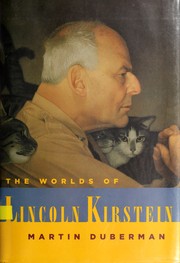
The worlds of Lincoln Kirstein
Martin B. Duberman · 2008
Where to buy
Amazon’s price changes daily, so the most accurate place to see it is there, at the moment you buy.
View on AmazonAbout the book
Lincoln Kirstein’s contributions to the nation’s life, as both an intellectual force and advocate of the arts, were unparalleled. While still an undergraduate, he started the innovative literary journal Hound and Horn, as well as the modernist Harvard Society for Contemporary Art—forerunner of the Museum of Modern Art. He brought George Balanchine to the United States, and in service to the great choreographer’s talent, persisted, against heavy odds, in creating both the New York City Ballet and the School of American Ballet. Among much else, Kirstein helped create Lincoln Center in New York, and the American Shakespeare Festival in Stratford, Connecticut; established the pathbreaking Dance Index and the country’s first dance archives; and in some fifteen books proved himself a brilliant critic of art, photography, film, and dance. But behind this remarkably accomplished and renowned public face lay a complex, contradictory, often tortured human being. Kirstein suffered for decades from bipolar disorder, which frequently strained his relationships with his family and friends, a circle that included many notables, from W. H. Auden to Nelson Rockefeller. And despite being married for more than fifty years to a woman whom he deeply loved, Kirstein had a wide range of homosexual relationships throughout the course of his life. This stunning biography, filled with fascinating perceptions and incidents, is a major act of historical reclamation. Utilizing an enormous amount of previously unavailable primary sources, including Kirstein’s untapped diaries, Martin Duberman has rendered accessible for the first time a towering figure of immense complexity and achievement.
Book details
- Year
- 2008
- Language
- English
- Publisher
- Alfred A. Knopf
- Editions
- 3
- Pages
- 723
- ISBN
- 9781400041329
Data source: Wikidata
More by Martin B. Duberman