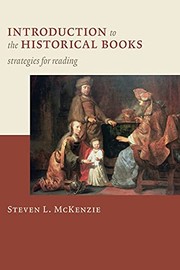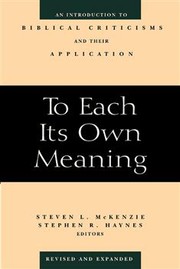
To Each Its Own Meaning
Steven L. McKenzie, Stephen R. Haynes · 1999
Where to buy
Amazon’s price changes daily, so the most accurate place to see it is there, at the moment you buy.
View on AmazonAbout the book
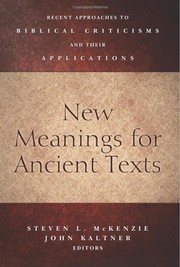
This single volume introduces the reader to the most important methods of biblical criticism by giving equal time to historical and literary approaches. Each chapter addresses five sets of issues: (1) definition of the method, important terms and concepts, the history of its development, assumptions made about the relationship of text and history, and prospects for the future; (2) the method in relation to others discussed in this book; (3) the method in action, with reference to a particular text in either Genesis or Luke-Acts; (4) the drawbacks of the method; and (5) suggested reading for those who wish to study further. Chapter topics include reading the Bible historically, by J. Maxwell Miller; source criticism, by Pauline Viviano; tradition-historical criticism, by Robert A. Di Vito; form criticism, by Martin J. Buss; redaction criticism, by Gail Paterson Corrington; social-scientific criticism, by Dale B. Martin; canonical criticism, by Mary C. Callaway; rhetorical criticism, by Yehoshua Gitay; structural criticism, by Daniel Patte; narrative criticism, by David M. Gunn; reader-response criticism, by Edgar V. McKnight; the poststructuralist approach, by William A. Beardslee; and feminist criticism, by Danna Nolan Fewell.
Book details
- Year
- 1999
- Language
- English
- Publisher
- Westminster John Knox Press
- Editions
- 4
- Pages
- 304
- ISBN
- 9780664257842
Data source: Wikidata
More by Steven L. McKenzie