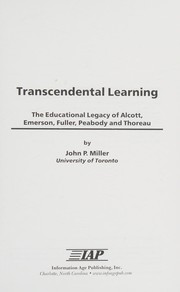
Transcendental learning
John P. Miller · 2011
Where to buy
Amazon’s price changes daily, so the most accurate place to see it is there, at the moment you buy.
View on AmazonThis is an affiliate link: if you buy through it, the site earns a small commission at no extra cost to you, which helps us bring quality content and maintain the site. As an Amazon Associate we earn from qualifying purchases.
About the book
Transcendental Learning discusses the work of five figures associated with transcendentalism concerning their views on education. Alcott, Emerson, Fuller, Peabody and Thoreau all taught at one time and held definite views about education. The book explores these conceptions with chapters on each of the five individuals and then focuses the main features of transcendental learning and its legacy today. A central thesis of the book is that transcendental learning is essentially holistic in nature and provides rich educational vision that is in many ways a tonic to today's factory-like approach to schooling. In contrast to the narrow vision of education that is promoted by governments and the media, the Transcendentalists offer a redemptive vision of education that includes: educating the whole child--body, mind, and soul; happiness as a goal of education; educating students so they see the interconnectedness of nature; recognizing the inner wisdom of the child as something to be honored and nurtured; a blueprint for environmental education; educating women of all ages; an experimental approach to pedagogy that continually seeks for more effective ways of educating children; a recognition of the importance of the presence of the teacher, and encouraging teachers to be aware and conscious of their own behavior; multicultural and bilingual education. -- From publisher description.
Book details
- Year
- 2011
- Language
- English
- Publisher
- Information Age Pub.
- Editions
- 1
- Pages
- 137
- ISBN
- 9781617355844
Data source: Wikidata
More by John P. Miller