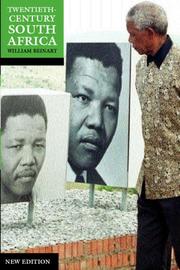
Twentieth-century South Africa
William Beinart · 1994
Where to buy
Amazon’s price changes daily, so the most accurate place to see it is there, at the moment you buy.
View on AmazonAbout the book
This book provides a stimulating introduction to the history of South Africa in the twentieth century. It draws on the rich and lively tradition of radical history writing on that country and, to a greater extent than previous accounts, weaves economic and cultural history into the political narrative. Apartheid and industrialization, especially mining, are central themes, as is the rise of nationalism in the Afrikaner and African communities. But the author also emphasizes the neglected significance of rural experiences and local identities in shaping political consciousness. The roles played by such key figures as Smuts, Verwoerd, de Klerk, Plaatje, and Mandela are explored, while recent historiographical trends are reflected in analyses of rural protest, white cultural politics, the vitality of black urban life, and environmental decay. The book concludes with an analysis of black reactions to apartheid, the rise of the ANC, and an assessment of the chances of a stable political future for a post-apartheid South Africa.
First sentence: By the early 1870s, the area that became South Africa had been washed by successive waves of European expansion, notably the Dutch maritime empire of the seventeenth and eighteenth centuries and British imperialism in the nineteenth.
Book details
- Year
- 1994
- Publisher
- Oxford University Press Southern Africa
- Editions
- 1
- Pages
- 296
- ISBN
- 9780195708967
Data source: Wikidata
More by William Beinart