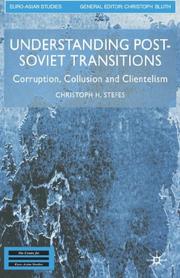
Understanding Post-Soviet Transitions
Christoph H. Stefes · 2006
Where to buy
Check today’s price on Amazon. We do not show prices because they change daily.
View on AmazonAffiliate link. As an Amazon Associate we earn from qualifying purchases.
About the book
For most successor states of the Soviet Union, corruption has been a dreadful legacy of communist rule. Systemic corruption has not simply been the unintended outcome of economic and political transitions that have gone awry, but has directly contributed to the undesirable outcomes of post-Soviet transitions, such as imperfect markets and the creation of semi-autocratic regimes. Armenia and Georgia, the case studies of this book, clearly illustrate the destructive impact of systemic corruption. However, due to their different modes of transition their systems of corruption have developed in different directions. The impact of corruption has therefore varied in these two countries. For Georgia, an anarchic system of corruption has meant economic stagnation and political instability, eventually culminating in the 2003 Rose Revolution. In contrast, Armenia's highly centralized system of corruption has stabilized both the economy and a plutocratic regime.
Book details
- Year
- 2006
- Language
- English
- Publisher
- Palgrave Macmillan
- Editions
- 4
- Pages
- 224
- ISBN
- 9781403936585
Data source: Wikidata