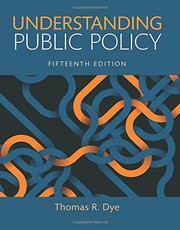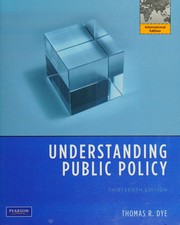
Understanding public policy
Thomas R. Dye · 1969
Where to buy
Amazon’s price changes daily, so the most accurate place to see it is there, at the moment you buy.
View on AmazonThis is an affiliate link: if you buy through it, the site earns a small commission at no extra cost to you, which helps us bring quality content and maintain the site. As an Amazon Associate we earn from qualifying purchases.
About the book
Cutting-edge in approach, this book gives readers concrete tools for not only understanding public policy in general, but for analyzing specific public policies. It focuses on what policies governments pursue, why governments pursue the policies they do, and what the consequences of these policies are. Very contemporary in perspective, it introduces eight analytical models currently used by political scientists to describe and explain political life and then, using these various analytical models--singly and in combination--explores specific public policies in a variety of key domestic policy areas. Explores eight analytic models--rationalism, incrementalism, elitism, interest group conflict, institutionalism, game theory, public choice, and the familiar policy process model. Uses the various analytic models to describe and explain public policy in such areas as criminal justice, health and welfare, education, economic policy, taxation, international trade and immigration, environmental protection, civil rights, federalism, and national defense. For anyone interested in the complex dynamics of the public policy making process in relation to a broad range of contemporary issues.
Book details
- Year
- 1969
- Language
- English
- Publisher
- Prentice Hall
- Editions
- 8
- Reader rating
- 4.6 / 5 (11)
- Pages
- 384
- ISBN
- 9780131174528
Data source: Wikidata
More by Thomas R. Dye