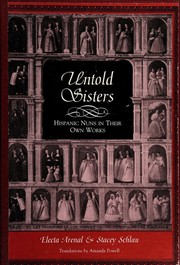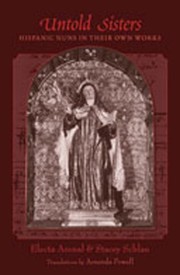
Untold sisters
Electa Arenal · 2009
Where to buy
Amazon’s price changes daily, so the most accurate place to see it is there, at the moment you buy.
View on AmazonThis is an affiliate link: if you buy through it, the site earns a small commission at no extra cost to you, which helps us bring quality content and maintain the site. As an Amazon Associate we earn from qualifying purchases.
About the book
When it appeared in 1989, Untold Sisters was the first general introduction to Hispanic convent culture published in the United States. Since then, much has been learned about the links among women of differing cultures, orders, and convents, their networks and support systems, their conflicts and rivalries. Most nun-authors lived in convents and were subject to multiple mechanisms of control. They found ways to negotiate, however, the repressive machinery of ecclesiastic and state institutions. Untold Sisters underscores how role models such at St. Teresa of Avila aided nun-authors in intertwining their personal beliefs with dogma, regardless of their social situations. At the same time that they wanted proximity to God, they sought to authorize speech, both oral and written. Historical changes and geographical distance alter the meanings of written words. The language used by the nuns was common to the writers' regions, generations, and even their particular religious orders. Without this knowledge, it is easy to mistake words or modes of expression-quite common or particular in meaning to an entire community, city, or epoch-as unusual or original. As in the first edition, the editors first study and then anthologize some representative nuns' writings, which are presented in modernized Spanish and English. Revealed here are the contradictions of female monastic life: repression and liberation, obedience and rebellion, conformity and individuality.
Book details
- Year
- 2009
- Language
- English
- Publisher
- University of New Mexico Press
- Editions
- 2
- Pages
- 478
- ISBN
- 9780826347381
Data source: Wikidata