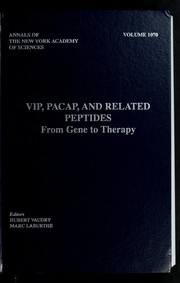
VIP, PACAP, and related peptides
Hubert Vaudry, Marc Laburthe · 2006
Where to buy
Amazon’s price changes daily, so the most accurate place to see it is there, at the moment you buy.
View on AmazonAbout the book
"This volume provides an overview on the biochemistry, physiology, and pharmacology of vasoactive intestinal polypeptide (VIP), pituitary adenylate cyclase-activating polypeptide (PACAP), and related peptides. VIP and PACAP are undoubtedly among the most fascinating neuropeptides ever identified. They belong to the largest family of regulatory peptides, which comprises several other prominent neuroendocrine peptides including secretin (the first peptide hormone that has been identified), glucagon, and growth hormone-releasing hormone. The structural and physiological relationships of these peptides as well as their receptors provide a unique model for investigating the processes of molecular evolution leading to the diversification of multigene families. The primary structures of VIP and PACAP have been remarkably well conserved across vertebrates, suggesting that these peptides must be involved in vital functions throughout the animal kingdom. Indeed, VIP and PACAP appear to be implicated in a large array of physiological processes such as development; growth; endocrine, cardiovascular, respiratory, reproductive and digestive functions; immune responses; and circadian rhythms. There is also clear evidence that VIP and PACAP exert both trophic and antiproliferative effects on normal and tumor cells. The beneficial influence of VIP and PACAP agonists and antagonists in various pathological states including heart failure, ischemia, asthma, impotence, and cancer has motivated the development of novel selective VIP or PACAP ligands that could potentially be used as antihypertensive, neuroprotective, bronchodilatory, vasodilatory, and/or antiproliferative drugs. The occurrence of multiple VIP/PACAP receptor subtypes and splice variants that exhibit tissue-specific expression and possess differential affinity for various ligands generates hopes for the development of new therapeutic agents that could act selectively on the desired target cells."--Publisher's website.
Book details
- Year
- 2006
- Language
- English
- Series
- Annals of the New York Academy of Sciences -- v. 1070
- Publisher
- Published by Blackwell Pub. on behalf of the New York Academy of Sciences
- Editions
- 1
- Pages
- 633
- ISBN
- 9781573315500
Data source: Wikidata
More by Hubert Vaudry